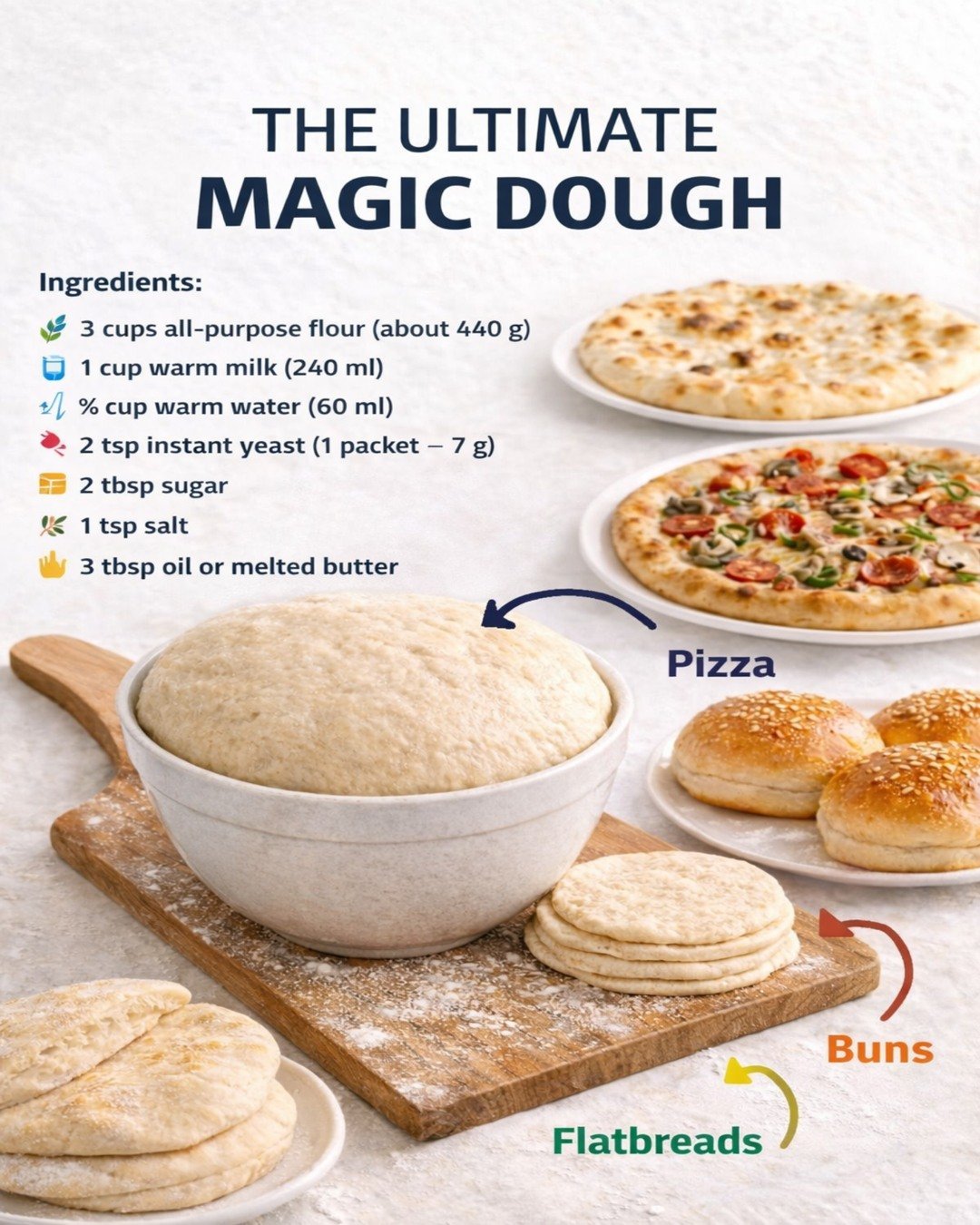
The 4 Essential Doughs Every Home Baker Should Know
Behind many favorite baked goods lies a small set of foundational doughs. Once you understand these basics, you can confidently create a wide variety of breads, rolls, and pastries.
These four doughs are among the most useful and versatile for everyday home baking.
Why Master a Few Core Doughs
Most yeast-based recipes follow the same core principles. By focusing on a small group of doughs, you can:
- Reduce reliance on complicated recipes
- Adjust sweetness and texture to your preference
- Save time with familiar techniques
- Bake confidently without guesswork
Think of these doughs as building blocks rather than one-time recipes.
Milk Bread Dough: Soft and Versatile
Milk bread dough is known for its soft, tender crumb and mild flavor. The use of milk and butter helps it stay moist longer than water-based doughs.
Best uses:
- Sandwich bread
- Soft buns
- Pull-apart loaves
Perfect when you want something fluffy that works with both sweet and savory fillings.
Donut Dough: Rich and Elastic
Donut dough contains more sugar, fat, and often eggs, giving it a richer flavor and soft interior. It’s designed to puff up beautifully when fried or baked.
Common uses:
- Classic ring donuts
- Filled donuts
- Sweet breakfast pastries
Because it’s more enriched, proper proofing is key to avoid a dense texture.
Cinnamon Roll Dough: Soft with Structure
This dough is slightly sweet and designed to be rolled, filled, and sliced without tearing. It balances softness with enough strength to hold fillings.
Ideal for:
- Cinnamon rolls
- Sweet spiral breads
- Sticky buns
Dinner Roll Dough: Light and Adaptable
Dinner roll dough sits between lean bread dough and sweet dough. With moderate sugar and fat, it’s incredibly flexible.
Works well for:
- Dinner rolls
- Slider buns
- Pull-apart breads
It’s forgiving, easy to shape, and great for everyday baking.
Key Differences Between These Doughs
Understanding what changes from one dough to another helps you adapt recipes with confidence.
Main factors:
- Milk vs. water (affects softness)
- Sugar levels (sweetness and browning)
- Fat content (tenderness)
- Eggs (richness and color)
Small adjustments in these ingredients create very different results.
Tips for Consistent Dough Results
For the best outcome with any yeast dough:
- Use warm (not hot) liquids to protect yeast
- Measure flour carefully to avoid dryness
- Allow enough time for proofing
- Knead until smooth and elastic
- Don’t rush the rising process
Consistency matters more than speed in baking.
Expanding Beyond the Basics
Once you’re comfortable with these doughs, you can:
- Add herbs, cheese, or seeds for savory variations
- Increase sugar or fillings for desserts
- Shape the same dough in different ways
- Adjust hydration for softer or firmer textures
Many professional bakers rely on variations of these same foundations.
Final Thoughts
Great baking doesn’t start with complex recipes—it starts with understanding dough.
Milk bread, donut dough, cinnamon roll dough, and dinner roll dough form a practical toolkit for bakers at any level. Once you learn how they work, you gain the freedom to bake creatively and confidently—without needing a new recipe every time.